Why UK Audiences Are Responding to Emotion-Led Digital Marketing in 2026

We’re in 2026 now, and as time passes, technology evolves, which means the way people make and consume content also changes alongside it. Audiences are now gravitating towards content that is familiar, emotionally relevant and has an authenticity to it rather than polished campaigns that do not resonate with them.
UK consumers are becoming increasingly selective about what type of content they engage with, due to e ride in AI-generated content, performance-driven messaging and algorithm-led optimisation. Throughout this article, we will discuss why UK audiences are responding to emotion-led digital marketing in 2026.
Have you scrolled through social media platforms this year and noticed a change? Engagement patterns are becoming more selective, and the way audiences interact with content is shifting. While social media still reaches a large proportion of the UK population, behaviour on these platforms is no longer passive or automatic.
With 54 million active social media users in the UK, accounting for around 79% of the population, reach remains high. However, usage is becoming more intentional, with audiences increasingly choosing what feels relevant and worth their attention.
According to Ofcom’s Online Nation report, UK adults now spend an average of 3 hours and 41 minutes online each day. However, despite this sustained level of access, engagement is becoming more selective, with users increasingly choosing content that feels relevant and worth their time rather than passively consuming everything in their feeds.
It has come to the point where UK users no longer consume content indiscriminately; they are filtering what they engage with based on relevance, familiarity and emotional connection. Because of this, the environment has become far more competitive for brands, where attention must be earned through emotional resonance and relevance rather than volume alone.
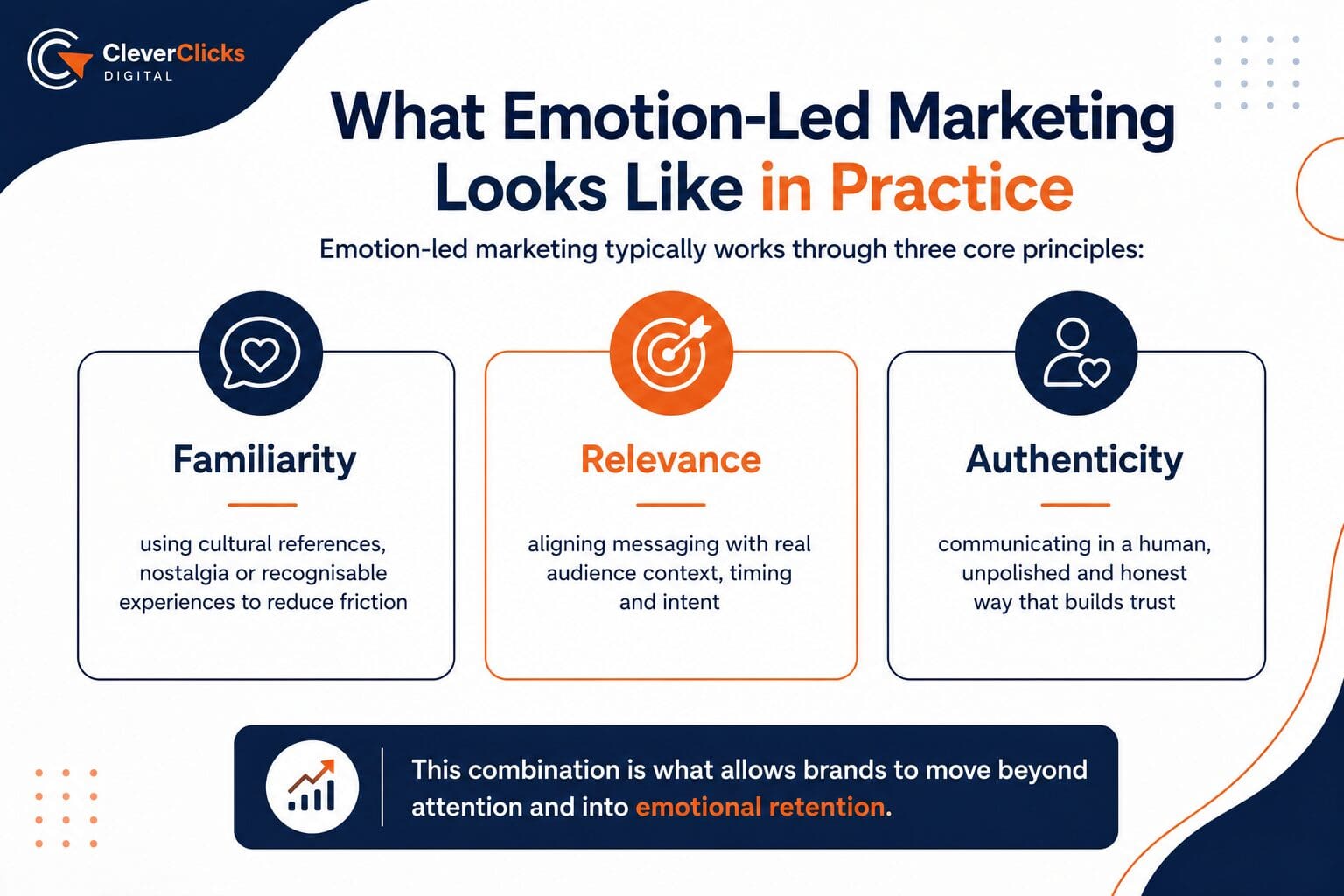
Content that omits an emotional reaction is far more memorable and engaging, as it feels more human in a world increasingly saturated with AI-generated content, automated ads and algorithm-optimised messaging. People instinctively resonate with content that includes nostalgic references, emotionally grounded storytelling and familiar cultural cues, as it reduces friction and feels more relatable.
While rational messaging still plays a role in explaining product features and functional benefits, it is emotional connection that drives memory, preference and long-term brand loyalty. In an increasingly saturated digital environment, audiences are far more likely to remember how a brand made them feel rather than the technical details of what it offers.
This shift is also being driven by changing levels of trust in brands. According to the Edelman Trust Barometer, only around one-third of UK consumers say they trust brands to do what is right. As trust declines, audiences are becoming more selective about the content they believe and engage with, placing greater value on authenticity and emotional honesty.
According to Research Live, 60% of UK consumers trust content that feels useful and relevant, and Gitnux found that campaigns with purely emotional content perform about 2x better than rational-only campaigns. This shows that emotional relevance plays a key role in engagement, and content that reflects shared experience and recognises cultural context is more likely to land.
In short, yes. The rise in throwback aesthetics and formats that feel familiar is not necessarily about wanting to go backwards; it is more of a reaction to how people feel online today. Content has become quite overwhelming and saturated; there is too much of it, too many trends, and a growing sense that a lot of it feels overly forced or polished. Nostalgia cuts through that.
Nostalgic content works because it taps into shared memories and an emotional reaction, bringing people back to a time when social media felt more real, fun and relaxed. It was less about performance. UK audiences, where the preference is for subtlety and authenticity, really resonate with this type of content, as it feels reassuring and not staged.
This is important for marketing as nostalgic content is a lot easier for audiences to connect with. It is a feeling that is instantly recognised, and that familiarity improves engagement rates, especially at a time when attention is limited and expectations are high.
Compared to the amount of volume UK consumers are exposed to, very little of it is actually remembered. As attention spans become more selective, audiences are gravitating more towards content that feels familiar and emotionally grounded, due to it being easier to process and trust.
When brands acknowledge collective experiences or reference familiar moments, they reduce resistance and are then able to create an emotional reaction, such as empathy, rather than interruption. This can also be done through nostalgic cues, whether that be cultural, tonal or visual.
This shift shows how you can make people feel that what matters just as much as what you’re selling, especially for UK brands. Campaigns that are made to feel relevant and human are now far more likely to connect to British audiences, compared to those that are product features or quick wins.
Brands that understand their audience and reflect real experiences are much more likely to build trust, which is what keeps your brand in consumers’ minds, especially in a crowded digital era. If people feel something, they are more likely to remember you and come back when it counts.
Context is important when it comes to using nostalgia within marketing campaigns, as audiences are quick to spot surface-level trend adoption pieces. Simply trying to achieve nostalgia through communication or visuals is not enough; there needs to be relevance, a story, something meaningful. Brands can use connecting past and present, acknowledge shared experiences, reflect on how their audience or industry has evolved, and demonstrate continuity rather than imitation. These things are more likely to resonate with audiences, as nostalgia is a tool used to support a wider narrative, not replace it.
To conclude, brands must realise the future of digital marketing within the UK is not just about shouting louder or producing a higher quantity of content; it is about understanding what audiences actually need from brands, emotionally and practically.
Consumers prefer content that resonates and is respectful of their time, something grounded in real experiences. Brands that embrace this shift will find it easier to build consumer trust, engagement and customer loyalty. The brands that stand out in 2026 will not necessarily be the most technically advanced, but they will be the ones that feel real, human and culturally aware, all whilst being emotionally in tune with their audience.

How AI Is Changing Digital Marketing in the UK (And What to Do About It in 2026)
Read full blog
5 Things That Make Visitors Bounce from Your Website Instantly
Read full blog